
Mobility: Decarbonising transportation
An analysis of how Europe’s mobility and transport systems must evolve to meet climate targets, address energy security, and enable low- and zero-carbon solutions across transport modes.
Europe’s future competitiveness is closely linked to how its mobility and transport systems evolve in response to climate targets, energy security concerns, and changing market conditions. Transport today accounts for roughly a quarter of EU greenhouse gas emissions, and unlike the power sector, it remains heavily dependent on fossil fuels. While electricity has become the dominant energy carrier in much of Europe’s power generation, the transport system is still largely carbon-based. Road transport is only partly electrified, rail is unevenly electrified across member states, and aviation and shipping remain overwhelmingly reliant on fossil fuels. The central question is therefore not whether decarbonisation will occur, but how quickly and at what scale low- and zero-carbon solutions can become viable across different transport modes.
From the perspective of industrial technology providers such as ABB, this transition is best understood as a systems challenge rather than a single technological shift. Electrification is already established in parts of the transport system, particularly in passenger vehicles, urban buses, and rail. In other areas, such as heavy-duty road transport, ports, and short-sea shipping, electric solutions are emerging but still represent a small share of total activity. Battery-electric ferries, for example, are now operating in several European regions, demonstrating that fully electric maritime transport is technically feasible under certain operational conditions. At the same time, long-distance shipping, aviation, and some segments of heavy industry-linked transport continue to depend on fuels with no clear large-scale substitute yet in place.
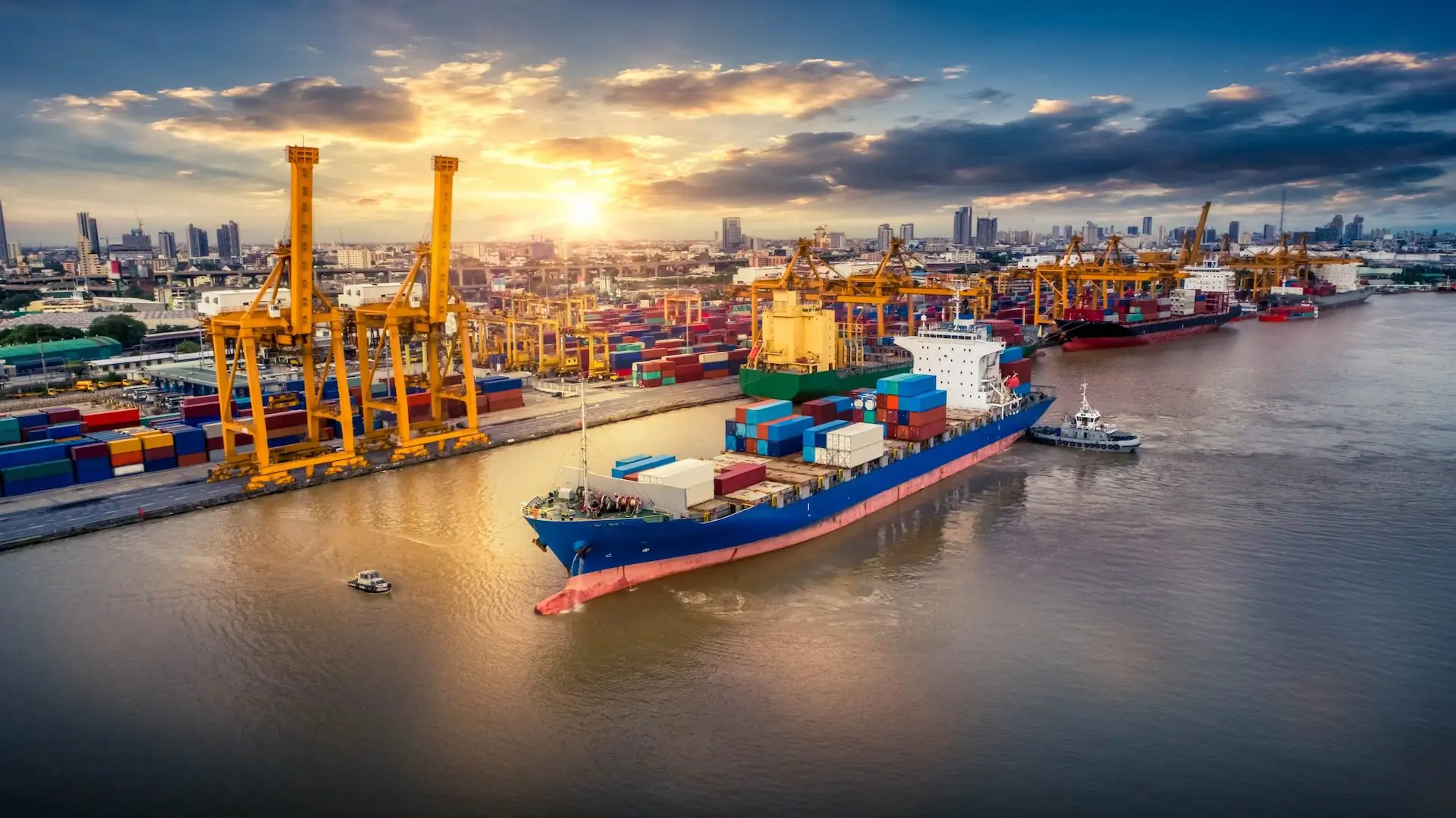
Heavy road transport illustrates both progress and remaining uncertainty. Megawatt-scale charging systems are being deployed along selected freight corridors, reducing charging times and enabling electric trucks to operate on defined routes. However, these solutions currently serve a limited share of total freight volumes, and their expansion depends on grid capacity, standardisation, and coordinated infrastructure investment. Similar questions arise in maritime transport, where shore power, hybridisation, and alternative fuels can significantly reduce emissions in ports and coastal operations, but where global fleets still lack regulatory clarity and fuel availability at scale.
Infrastructure is a critical shared constraint across all transport modes. Charging networks, grid reinforcement, port electrification, and fuel supply systems require long-term investment that no single actor can deliver alone. Public funding can reduce early risk and accelerate deployment, but the majority of capital must ultimately come from the market. Industrial companies play a specific role in this context: by investing in research and development, integrating complex systems, and deploying solutions at scale, they help translate policy objectives into bankable projects. Companies like ABB continue to invest in power electronics, automation, digital systems, and grid technologies precisely because these are foundational enablers for multiple decarbonisation pathways, even where the end-state remains uncertain.
European policy frameworks increasingly aim to create incentives rather than prescribe outcomes. Instruments such as the Connecting Europe Facility and the Alternative Fuels Infrastructure Facility support early infrastructure build-out, while the Innovation Fund channels emissions trading revenues into emerging technologies. These mechanisms do not replace private investment but seek to unlock it by reducing risk and improving predictability. The market remains the dominant source of funding, and its response depends on credible price signals, stable regulation, and interoperable standards across borders.
In maritime transport, regulatory uncertainty remains a significant challenge. The International Maritime Organization’s earlier ambitions to substantially reduce emissions by mid-century were intended to provide a long-term signal to shipowners and investors. The recent decision to delay binding global targets has weakened that signal, increasing reliance on regional initiatives. In this context, European ports, operators, and technology providers may choose to move ahead with electrification, shore power, and alternative fuel solutions where the business case can already be demonstrated, while acknowledging that these remain partial solutions within a global system.
Carbon pricing mechanisms such as the EU Emissions Trading System and the Carbon Border Adjustment Mechanism further influence investment decisions by gradually internalising the cost of emissions. Together with targeted infrastructure funding, they contribute to a market environment where low-carbon solutions can compete on economic as well as environmental grounds. However, significant open questions remain around scalability, energy availability, and the pace at which heavy transport and shipping can realistically transition.
Decarbonising mobility is therefore less a single transition than a sequence of overlapping shifts, moving at different speeds across sectors and regions. Progress depends on shared infrastructure, sustained industrial innovation, and policy frameworks that crowd in private capital rather than substitute for it. The outcome is not predetermined, but the direction of travel is increasingly shaped by those actors willing to invest, experiment, and scale solutions under real-world conditions.
About Marcus Högblom
Marcus Högblom is Vice President of Global Sales at ABB Marine & Ports. He has been with ABB’s propulsion business since 2009 and holds a degree in Naval Architecture and Marine Engineering from the Helsinki Institute of Applied Sciences. Prior to ABB, he worked for 14 years in the fire safety industry with Marioff Corporation and United Technologies, most recently as General Manager for Marine and Offshore.